
ionel Messi stepped off a private jet at Beijing Capital International Airport on a humid Saturday morning, and within minutes, social media feeds were flooded with grainy videos of the Argentine star walking through a VIP corridor. The arrival itself was unremarkable—black cap, casual tracksuit, a polite wave—but the reaction was anything but. Hundreds of fans had camped outside the airport for hours, some holding handmade signs, others simply shouting his name. A friend of mine, a lifelong Barcelona supporter。drove three hours from Tianjin just to catch a glimpse of the team bus. He didn't see Messi. He didn't care. "It's about being part of the moment," he told me later, sweat still dripping from his forehead. That sentiment captures the peculiar energy surrounding Messi's visits to China: a mix of genuine adoration and performative fandom that often overwhelms the actual event.The trip, officially part of a friendly match arrangement between Argentina and Australia in Beijing, has been billed as a promotional coup for the Chinese capital. Yet the logistics have been messy. Ticket prices for the match at the Workers' Stadium ranged from 580 to 4,800 yuan, drawing complaints about accessibility. Scalpers reportedly asked for triple face value within hours of release. Organizers initially promised an open training session, then cancelled it without explanation。
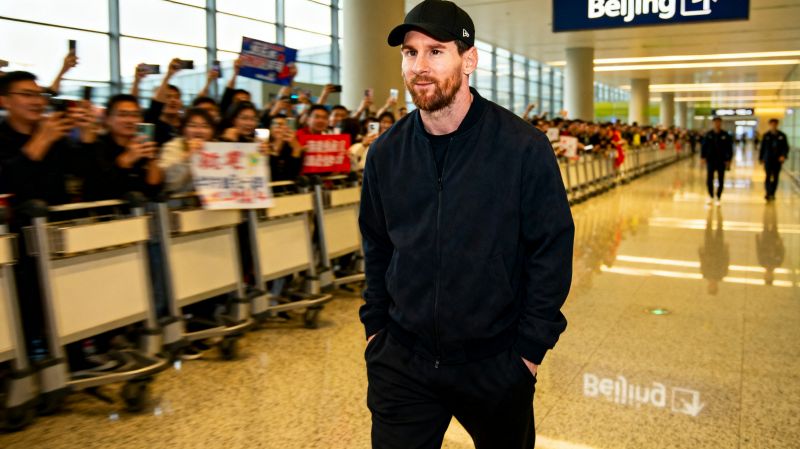
citing "security concerns." Local media coverage has been breathless but thin on details—lots of footage of Messi's hotel lobby, little on how ordinary fans might actually interact with the squad. A colleague who covers sports business put it bluntly: "This is less about football and more about brand management."Messi himself has been characteristically low-key. He smiled for cameras at the hotel, signed a few jerseys, and said nothing controversial. His presence alone is enough to generate headlines。and he knows it. Compare this to his 2017 visit, when he met with students at a Beijing high school and played a brief kickabout—that felt organic, if staged. This time, the schedule is tighter, the security heavier, the commercial ties more obvious. A sponsorship event for a Chinese liquor brand took up a chunk of his first full day. The optics are fine, but they reveal the uneasy marriage of sport and commerce that defines modern mega-star tours. Nobody forced him to come;the money is good, the fanbase is massive. Still, you wonder how much of this he genuinely enjoys.For Chinese fans, the Messi arrives in Beijing narrative is a double-edged sword. On one hand, it's a rare chance to see the World Cup winner in person, even from a distance. On the other, the frenzy exposes the fragility of fan infrastructure here. There's no reliable public transport plan for match nights。no official fan zone, no clear communication about player access. A student I spoke to outside the hotel had been waiting for six hours with a poster she'd spent two days painting. Security guards had already told her group to disperse twice. "I know I won't meet him," she said, laughing a little. "But if I go home now, I'll regret it." That kind of devotion is real, but it's also easily exploited. The Messi economy runs on it.Will this visit be remembered as a success?
Depends on whom you ask. The organizers will count ticket sales and sponsor impressions. Fans will count blurry photos and near-misses. Messi will fly out on a private jet, probably within 72 hours, and the city will return to normal. The deeper question is whether these tours can evolve beyond spectacle. A few small signs suggest yes: a local youth club organized a watch party with former players, and some fan groups coordinated to share real-time updates instead of chasing rumors. It's not much. But it's something. Messi arrives in Beijing。and leaves behind a city still figuring out how to host a global icon without losing its cool. That's not his problem, but it's ours.